How to arrange a narrow entryway so shoes stop blocking the door
· Editorial team sacramentonewsdaily24.com
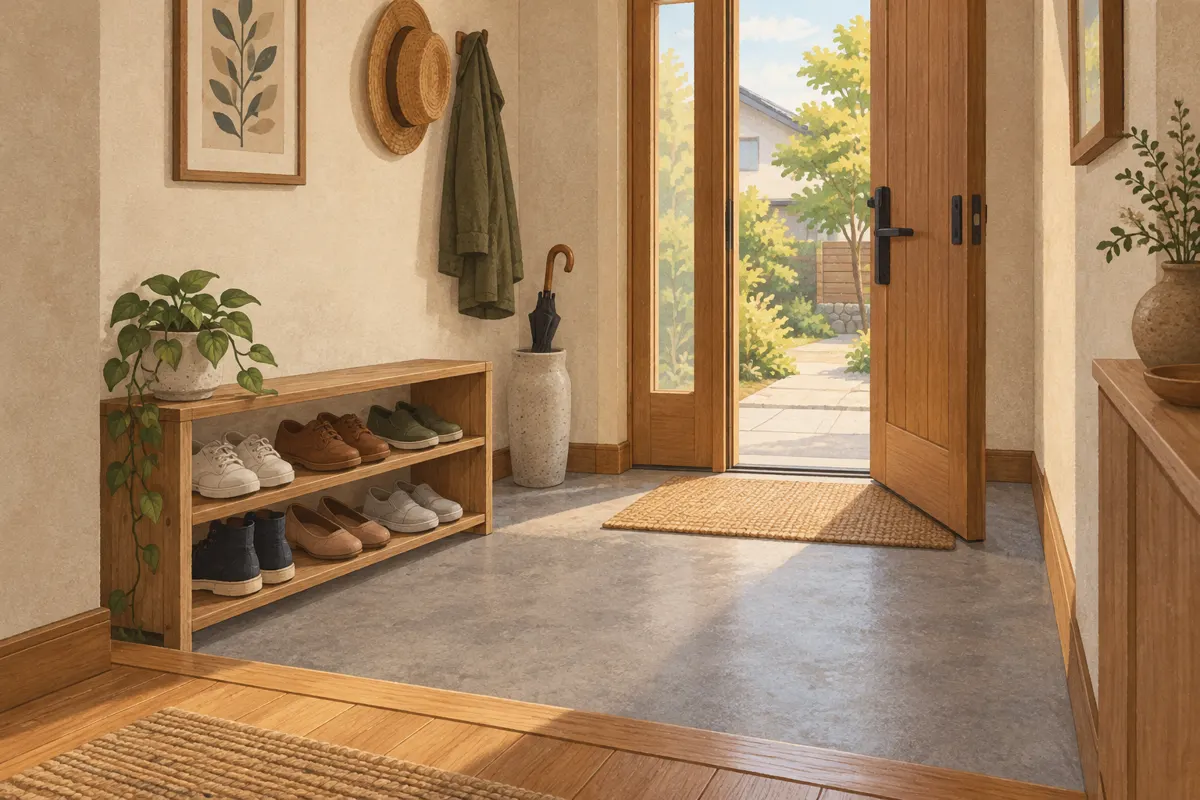
Keep shoes outside the door’s swing and along one side of the entryway, with only regularly worn pairs stored near the entrance. Start by checking how the door opens and where people walk, then choose storage that fits the space left over. The layout below is an editorial proposal you can adapt to your home.
Check the door and walking route first
Empty the entryway before deciding where a rack or cabinet should go. A unit can fit against a wall yet still interfere with the door, especially when shoes stick out beyond its shelves. Check the whole movement of the door, including the handle, rather than measuring only the gap beside it.
- Open the door through its normal range and identify the floor area it sweeps across.
- Walk from the entrance into the home carrying a bag, as you would when arriving.
- Measure the available wall length and depth outside that route. Include baseboards and nearby doors.
- Mark a proposed storage footprint with removable tape, then repeat the opening and walking checks.
Leave room to stand while taking shoes off. If that requires stepping around a rack or moving a basket every time, try another position or a shallower option.
Separate everyday shoes from the rest
The entryway does not need to hold your entire shoe collection. Gather the pairs currently scattered there and sort them by how often you use them. Good Housekeeping’s shoe-cupboard guide recommends clearing storage completely, reviewing what you keep, and placing frequently worn shoes where they are easy to reach.
- Daily rotation: shoes household members are wearing regularly now.
- Occasional or seasonal pairs: footwear that can live in a bedroom closet or another suitable storage area.
- Pairs to review: shoes that need repair, no longer fit, or are no longer worn.
Set the entryway’s capacity by the space available. If the daily group overflows, narrow it further rather than adding another row on the floor. Keep pairs together so nobody has to pull several shoes out to find a match.
Choose storage by depth and access
Choose a storage type only after checking the footprint. The following options are editorial proposals; their usefulness depends on your door position, wall space, and footwear. Check both the unit’s dimensions and the space needed to use it.
- A shallow open rack: useful when shoes need to be visible and easy to put away. Check that heels and toes stay within the planned footprint.
- A slim shoe cabinet: useful for containing visual clutter. Allow space for its compartments to open, and check that your largest shoes fit inside.
- Wall shelves: an option where usable wall space is available. Follow the mounting instructions and keep shelves clear of the door.
- Storage inside a nearby closet: worth considering when furniture would crowd the entryway. Check that the closet door still opens easily.
Use your bulkiest everyday pair as the fit check. A shelf arrangement that accommodates sandals may need different spacing for boots. Add a bench only if there is room to sit and stand without blocking passage.
Give each pair an easy place to return to
Put the most frequently used pairs in the easiest positions to reach. Allow taller footwear enough headroom, and group smaller, flat pairs where they remain visible. This follows the source guide’s approach of arranging storage around shoe type and frequency of use.
As an editorial proposal, assign each person a shelf or a small section. Avoid stacking everyday shoes behind one another if retrieving the back pair means leaving the front pair on the floor. Keep a contained spot for wet or muddy footwear outside the door’s swing, and let shoes dry before returning them to enclosed storage.
Reset the entryway before overflow builds
A simple return routine keeps the arrangement useful. When another pair enters the rotation, move an occasional pair back to its longer-term storage. During a quick tidy, reunite loose shoes, remove dirt from the storage area, and return anything left in the walking route.
If shoes repeatedly collect in the same spot, adjust the arrangement. Their assigned shelf may be awkward to reach, too crowded, or too far from where people take them off. Move the everyday pairs closer within the available clear space, then check the door and walking route again.