A family outing checklist kids can help pack
· Editorial team sacramentonewsdaily24.com
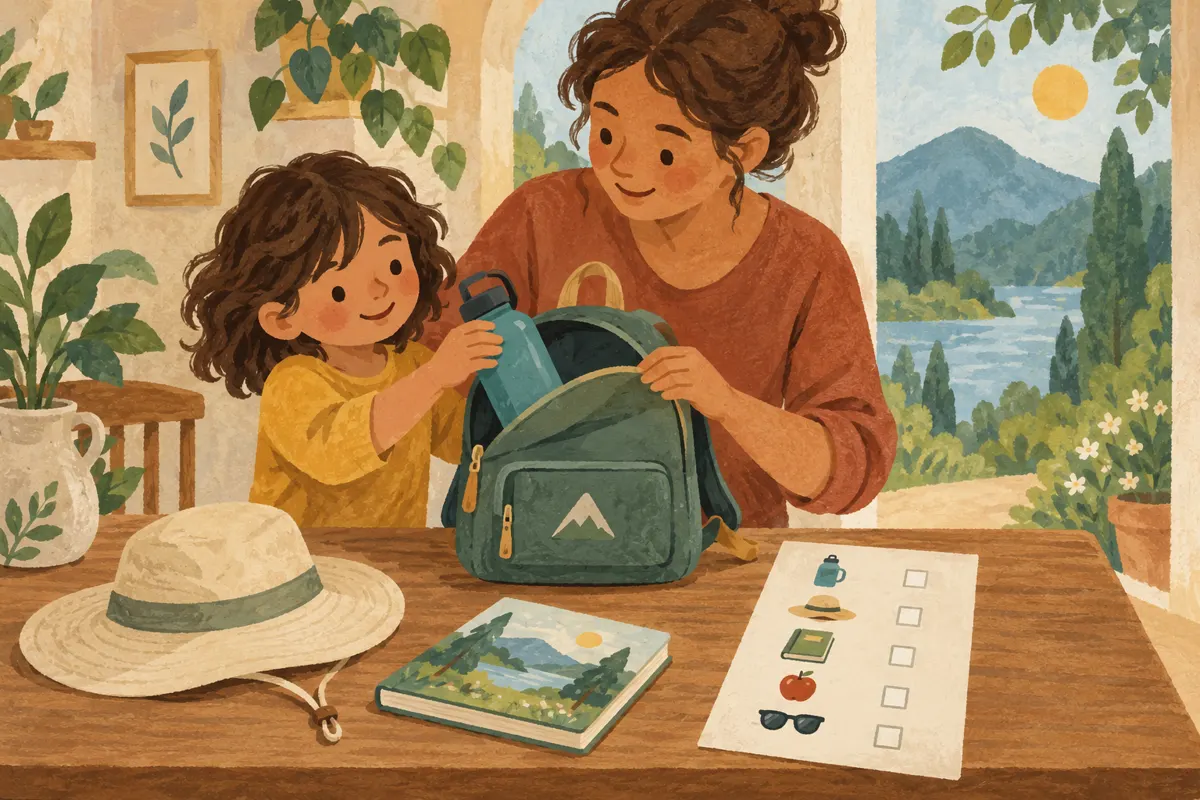
Teach kids to pack for a family outing by giving them a short picture checklist, assigning items they can manage, and checking the finished bag together. Start with a familiar library visit, park stop, or community event. The proposed routine below keeps children involved while leaving an adult responsible for essential supplies.
Make a picture checklist for one familiar outing
Begin with a specific destination rather than a list for every possible trip. Tell your child where you are going, what you will do, and what they will carry. A library bag might need return books; a park bag might need a hat. Keep the first attempt small enough to complete together without rushing.
- Choose a bag your child can open, close, and carry comfortably.
- Draw or photograph each item, then add a short label beneath its picture.
- Put a check box beside each picture. Use pencil so the same sheet can be reused.
- Keep the checklist beside the bag and show your child how to mark an item after it goes inside.
Use pictures of your actual belongings when possible. A photo of the blue bottle or striped hat gives a child a clear object to find. For a reader, combine pictures with words rather than replacing the whole checklist at once.
Use a short, reusable packing list
This proposed checklist is a starting point for an ordinary local outing. Cross off anything unnecessary before your child begins, and add the destination item. Explain that a crossed-out item means “not needed today,” so an empty box does not become a puzzle.
- Water bottle: an adult fills it or checks the fill and lid.
- Snack, if needed: an adult approves it and decides how it should be carried.
- Weather item: a hat, light layer, or rain jacket chosen together.
- Destination item: return books for the library, a small play item for the park, or something requested for the event.
- One optional comfort or activity item: a small book or toy that fits easily.
- Final check: close the bag, put it on, and show an adult.
Keep shared supplies on a separate adult list. The child’s checklist should describe their own job clearly, without making them responsible for everything the family needs. Avoid filling spare space simply because it is available.
Divide jobs by what each child can do
Assign tasks by ability and familiarity rather than expecting every sibling to pack independently. A child who needs help reading can still match an object to a picture. A child comfortable with the routine can gather several items and check them off.
- With close help: choose between two suitable items, find the matching picture, and place the item in the bag.
- With occasional prompts: gather items from familiar places and mark each completed box.
- With more independence: review the outing, suggest a needed item, pack the bag, and explain the choices.
Demonstrate one task, then let your child try it. Say “Find the bottle picture” instead of naming every next item. If the bag becomes crowded, ask which optional object they want to leave home. Give each sibling a clear job so an older child does not automatically take over.
Finish with a quick adult check
Before leaving, have your child show the packed items or lay them beside the bag. An adult check lets children practice making choices while someone verifies that the essentials are present and suitable.
- Compare the items with today’s checklist, including the destination item.
- Check bottle lids, snack containers, and whether the chosen layer suits the outing.
- Ask your child to close the bag and try carrying it. Move items to the adult bag if it feels uncomfortable.
- Keep keys, medicines, tickets, and other essential adult-managed items under adult control.
If something is missing, point to its picture and let your child finish the task. If time is short, help directly and practice again another day. There is no need to turn a forgotten item into a test or withhold something essential.
Reset the bag when you get home
Make unpacking part of the same proposed routine. Put the bag in its usual spot and work through a short reset before it is forgotten in a corner.
- Empty the bag and remove wrappers, leftover food, and damp clothing.
- Put bottles and containers where they can be washed, and return other items to their usual places.
- Erase the checklist marks and note any useful change for next time.
- Store the empty bag with its checklist, ready for the next outing.
Ask one concrete question: “What was hard to find?” Use the answer to adjust storage or simplify a picture. Keep the routine recognizable, then hand over another small task when your child is ready.