How to keep reusable shopping bags ready for your next errand
· Editorial team sacramentonewsdaily24.com
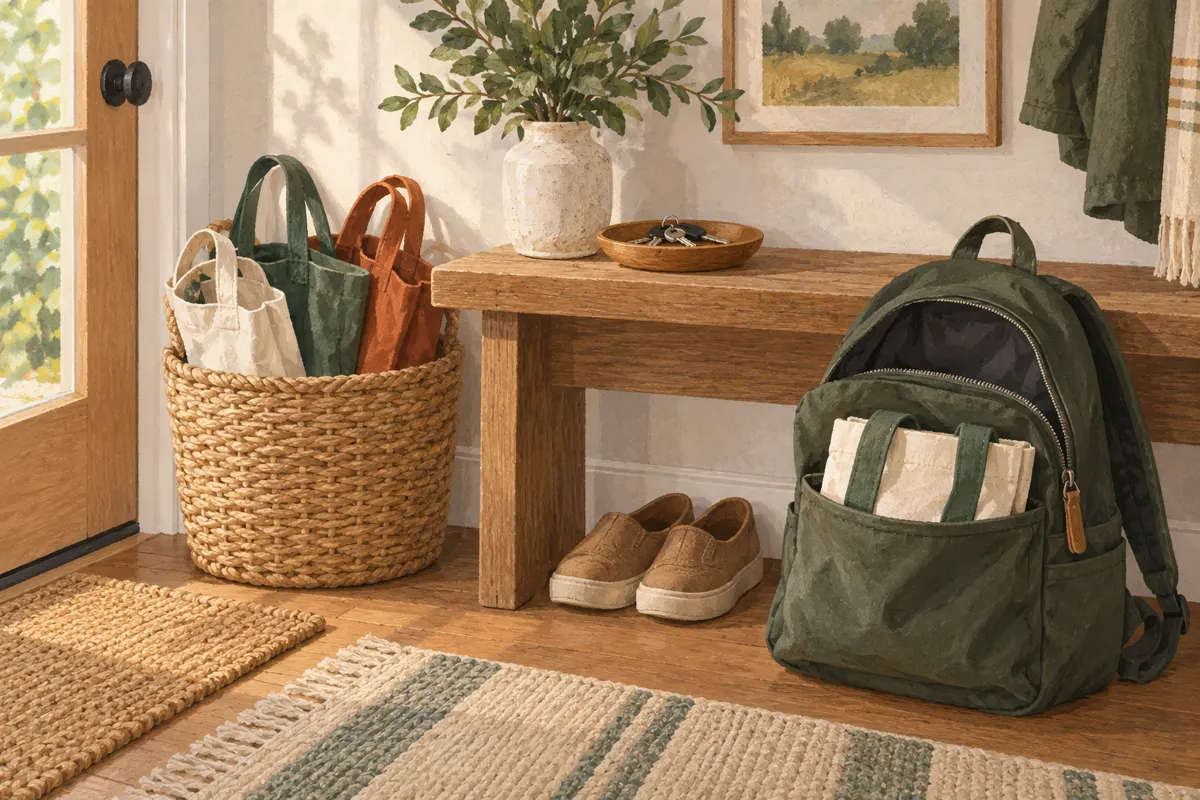
Put empty reusable shopping bags back where you will pick them up for your next outing: beside the door, in your everyday bag or with your car essentials. Make that return part of unpacking. The proposed routine below gives each bag a clear home and a clear route back to it.
Choose a storage spot on your way out
Start with the exit you actually use. If you leave through the front door, try a hook or small basket near your keys. If you usually head out through the garage, put your shopping bags beside the belongings you collect there. Choose a spot that keeps the walkway clear and lets you grab the bags without searching.
For this proposed setup, give your main shopping bags one regular home. Avoid dividing them among several drawers or closets unless each location serves a specific purpose. A compact spare can live in your backpack, while the larger shopping set stays by the door. You should be able to tell where each belongs.
Finish unpacking by returning the bags
Treat putting groceries away and returning the bags as one task. Before leaving the kitchen, deal with the empty bags instead of setting them aside for later. Here is a proposed sequence you can adapt to your home:
- Empty every bag, including small pockets and the bottom corners.
- Check for spills, crumbs or anything that needs cleaning.
- Set aside bags that need care, following their cleaning instructions.
- Fold the clean, dry bags and place smaller ones inside a larger bag if that makes the set easier to carry.
- Return the set to its regular spot before starting another task.
If your bags belong in the car, use the door-side spot as a temporary stop, then take them out on your next departure. Do not leave them on the kitchen counter with the intention of remembering later. If a bag needs washing, return it to the ready set once it is completely dry.
Keep a folded spare with everyday belongings
A spare bag gives you an option when an unplanned errand comes up. Flat cotton totes can fold down for storage, while bags with a base and side panels offer more room for bulky items. Choose from what you already own according to what you usually carry.
As a practical proposal, reserve a pocket in your everyday backpack, purse or work bag for one folded shopping bag. Keep that pocket easy to reach. If you change your everyday bag, move the spare along with your wallet and other essentials.
After using the spare, put it back in that pocket when you unpack. Otherwise, it can become another bag in the main pile while your everyday carry is left empty. For outings without a backpack or purse, place a compact bag beside the keys you plan to take.
Match the ready set to your usual errands
Keep the bags you regularly use within easy reach. Bag shape, handle length and stitching are relevant to everyday use: a wider base can accommodate bulky purchases, and longer handles allow shoulder carrying. Check the condition of handles and seams before relying on a bag for a heavier load.
- For small errands, keep a compact tote in your everyday carry.
- For regular grocery trips, keep your usual shopping set together near the exit.
- For occasional bulky purchases, store a larger bag separately and add it when planning that trip.
- In a shared household, agree on one return spot so everyone knows where to find the ready bags.
Use one departure check and adjust when needed
Add bags to the check you already make before leaving. A proposed check is: keys, wallet, phone, bags. For a planned shopping trip, put the bags beside your departure essentials when you prepare your list. If you use a phone reminder, attach it to that errand instead of creating a separate recurring alert.
When you forget the bags, look at where the routine broke down. Were they still in the kitchen? Move them during unpacking. Were they ready beside a door you did not use? Change the storage spot. Did you stop at a store unexpectedly? Restore the spare in your everyday bag. Adjust the missed step so the next outing starts with bags within reach.