How to reuse one-sided paper without creating another clutter pile
· Editorial team sacramentonewsdaily24.com
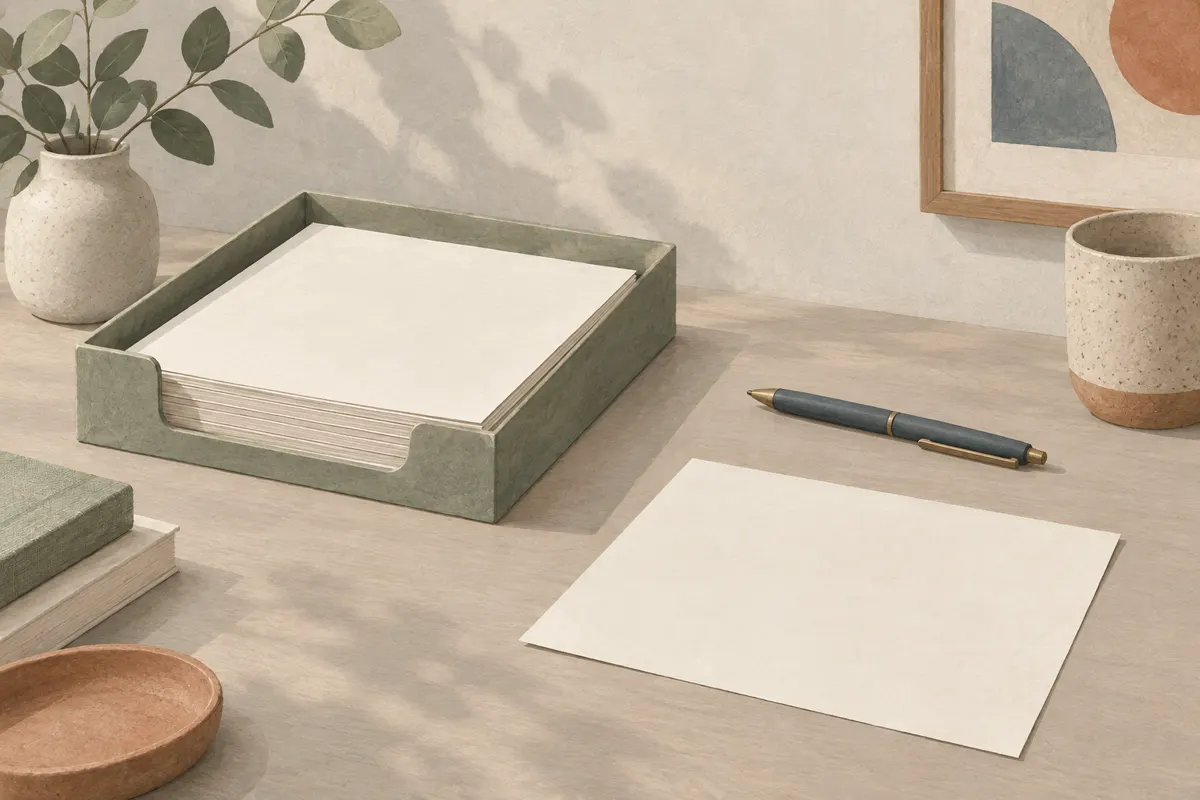
Reuse one-sided paper by keeping a small, ready-to-use stack where you already write lists or rough notes. Check both sides for private information, place usable sheets blank-side up, and stop collecting when the holder is full. Our proposed approach is one station, a few everyday uses, and a storage limit that makes the paper easy to reach.
Choose paper you can comfortably leave on display
Start with paper you are finished using as a document. A blank reverse side does not mean the original can be discarded: anything you still need to file, return, or act on belongs outside the scrap station. Then check the printed side before deciding whether to keep the sheet.
- Keep clean, dry sheets with enough blank space for the notes you actually make.
- Exclude sheets showing account numbers, medical details, passwords, signatures, or other private information.
- Skip paper that is greasy, damp, heavily crumpled, or awkward to write on.
- Remove staples and clips before adding suitable sheets to the writing stack.
Check the whole sheet, including small print and address labels. Scrap paper may end up in a shopping bag, on a shared desk, or in a child’s drawing pile. Keep sensitive documents out of this system and handle them through your usual secure disposal method.
Make one small station where you write
Wise Bread suggests keeping scrap paper accessible near a printer and clipping smaller pieces together for quick notes. For a simple household setup, our proposal is to choose one existing writing spot and give the paper a single shallow holder. Use a tray, a clipboard, or a sturdy clip you already own.
- Choose the place where you normally make lists or jot down reminders.
- Put a small holder there with a pen beside it.
- Arrange the sheets with the blank side facing up.
- Keep full sheets, or cut a small batch into halves if that better suits your notes.
- Take the next sheet from the front or top so older paper gets used.
Avoid creating a separate pile waiting to be cut or sorted. If preparing each sheet feels like a chore, keep it full-size. The station should be ready whenever you need a piece of paper.
Give the stack a few everyday jobs
One-sided paper works well for temporary writing and drawing. Wise Bread includes shopping lists, printed drafts, and doodle pads among its reuse ideas. Choose uses that already happen in your home so the stack has a regular purpose.
- Shopping lists: take a sheet when you begin checking the kitchen.
- Rough planning: sketch a furniture arrangement or outline a household task.
- Drafts: work out wording before writing a final card or message.
- Quick calculations: use the blank side for measurements or arithmetic.
- Drawing: offer suitable sheets when someone wants to doodle.
When a note becomes something you must keep, move the information to its proper home, such as your calendar or household notebook. Do not return an important reminder to the unused stack, where it can disappear between sheets.
Set a limit before adding more paper
Our proposed limit is whatever fits neatly in the chosen holder without bulging or spilling. A clip that closes easily or a tray with a clear fill line gives you a visible stopping point. There is no need to save every usable sheet.
When the holder is full, stop adding paper. Send excess nonsensitive sheets to the appropriate recycling stream under your local rules. Avoid starting an overflow envelope, a second drawer, or a box for future projects. Those containers make the limit meaningless.
If the stack hardly changes between your regular tidying sessions, reduce it. Keep only enough for the uses you have identified. Saving paper for an imagined craft project is optional; it does not need to become part of this everyday station.
Reset the station during ordinary tidying
Add a quick check to a routine you already have, such as clearing the desk. This is an editorial proposal for keeping the system manageable, rather than a schedule you need to track separately.
- Remove sheets that have been used on both sides.
- Move any notes you still need to their proper place.
- Straighten the remaining blank-side-up paper and return the pen.
- Check that the stack stays within its limit.
If paper keeps collecting elsewhere, move the station closer to where you reach for it or keep fewer sheets. A useful scrap-paper station earns its space by supplying your next list or draft.