How to turn handwritten class notes into a useful study guide
· Editorial team sacramentonewsdaily24.com
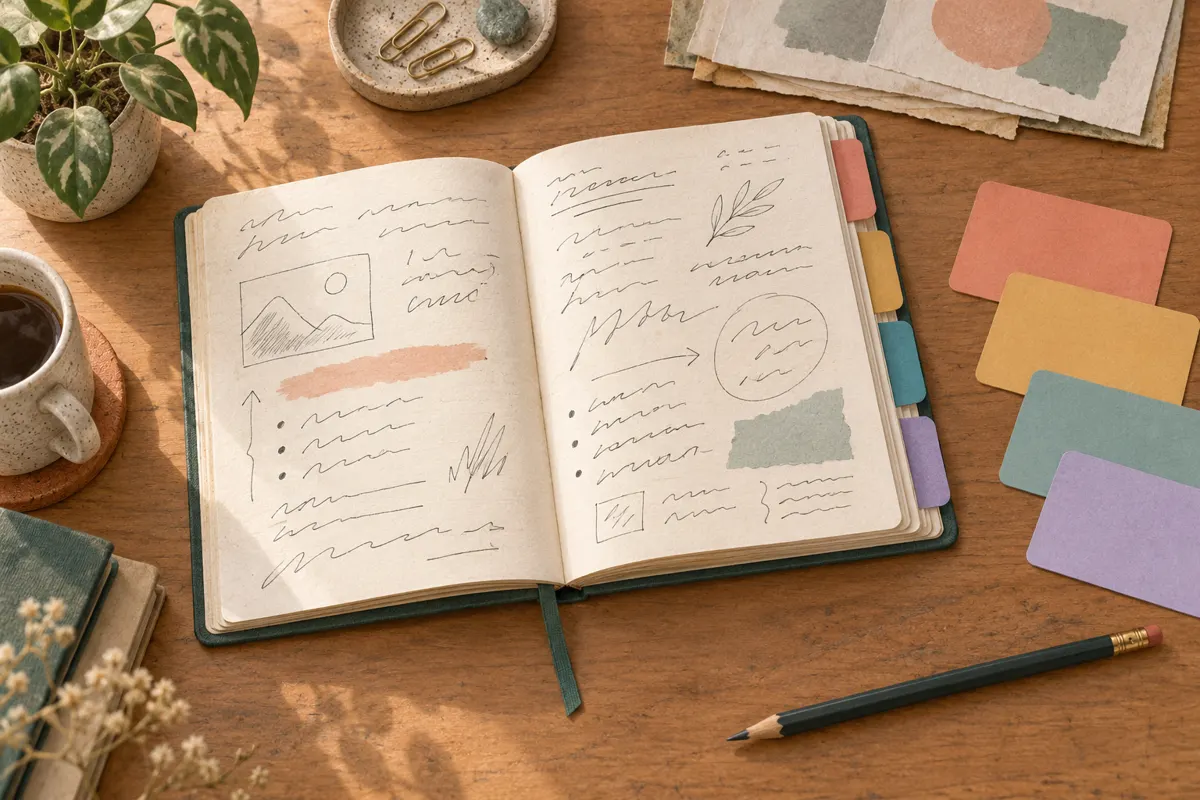
Turn handwritten class notes into a study guide by grouping related ideas, selecting the key points, and writing questions you can answer without looking. Keep references to the original pages and mark anything unclear for follow-up. You do not need to rewrite every page. The proposed workflow below works with a notebook, loose paper, or a simple document.
Sort your notes by topic
Start with the material covered by the assignment or exam. Gather the relevant notebook pages, handouts, and available course outlines. Use your instructor’s stated scope to set boundaries; a study guide becomes difficult to use when it includes every detail from the entire course.
Organize the guide around topics rather than lecture dates. A concept discussed in several classes belongs in one place, with references back to each original page. Topic-based organization is also one of the useful study-guide features described by NoteLyn.
- Number any unnumbered pages so you can find them again.
- Make a short topic list using course headings or recurring concepts.
- Write the relevant page numbers beside each topic.
- Flag pages with unreadable words, incomplete examples, or missing explanations.
Build a compact reference for each topic
For each topic, create a small reference section in your own words. Include enough information to check an answer later: essential terms, the main explanation, and an example or worked problem. Keep the original notes available for supporting detail instead of copying them all.
- Core idea: What does this topic explain?
- Key terms: Which definitions must you know?
- Method or relationship: What steps, causes, or connections matter?
- Example: Which class example makes the idea concrete?
- Reference: Where can you check the full explanation?
Match the reference to the subject. For math, retain the conditions for using a formula and a worked example. For history, connect events with causes and consequences. For literature, pair an interpretation with a passage reference. Preserve diagrams when their labels or relationships carry information that a sentence would lose.
Turn key ideas into practice questions
Give each topic questions that require you to produce an answer. Keep the answers separate, either on another page or beneath a cover sheet. NoteLyn’s guide recommends question-based review and answering before checking the material.
- Define: What does this term mean in this course?
- Explain: Why does this process happen?
- Compare: How do these two concepts differ?
- Apply: Which method would you use in this example, and why?
- Check an error: What is wrong with this explanation or solution?
Make questions specific enough to check. Replace “Understand photosynthesis” with “What are the inputs and outputs of photosynthesis?” For a calculation, write a fresh problem using the same method as the class example. Include an answer key with the reasoning or steps, so a correct guess does not hide a gap in understanding.
Mark gaps and verify unclear material
Keep a visible gap list as you build the guide. Distinguish an unreadable word from a missing explanation or a concept you cannot yet use. Each needs a different follow-up. Write a precise question such as “Why does the sign change in step three?” instead of “Review algebra.”
Check gaps against assigned readings, slides, or worked solutions. If those do not resolve the issue, bring the specific question to your instructor or compare notes with a classmate. Leave unresolved material clearly marked rather than supplying a plausible answer from memory.
If you use handwriting recognition or an AI study tool, treat its output as a draft. Compare it with the original pages, especially symbols, names, and diagram labels. Supplied tool descriptions offer summaries and questions, but those features do not establish that your converted notes are accurate.
Use your answers to choose what to review
Once the guide is usable, try a short review session. Close your notes, answer a selection of questions, then check your responses. For problems, show the steps. For explanations, say or write the reasoning rather than checking whether the answer looks familiar.
- Mark each response as correct, partly correct, or needing work.
- Identify the exact missing fact, reasoning step, or method.
- Revisit that part of the original material and update the guide.
- Try the missed question again in a later session, alongside questions from other topics.
Keep editing focused on what helps you answer questions. Add a clearer example when needed, correct an inaccurate definition, and remove duplicate explanations. Let the guide remain a working document that directs your next study session.